The role of digital platforms in modern football clubs
May 12, 2026 · 5 min
Informational
Football clubs today operate in a far more complex environment than ever before. Beyond what happens on the pitch, clubs are now responsible for managing communication, engagement, data, commercial activity, and development pathways across multiple audiences.
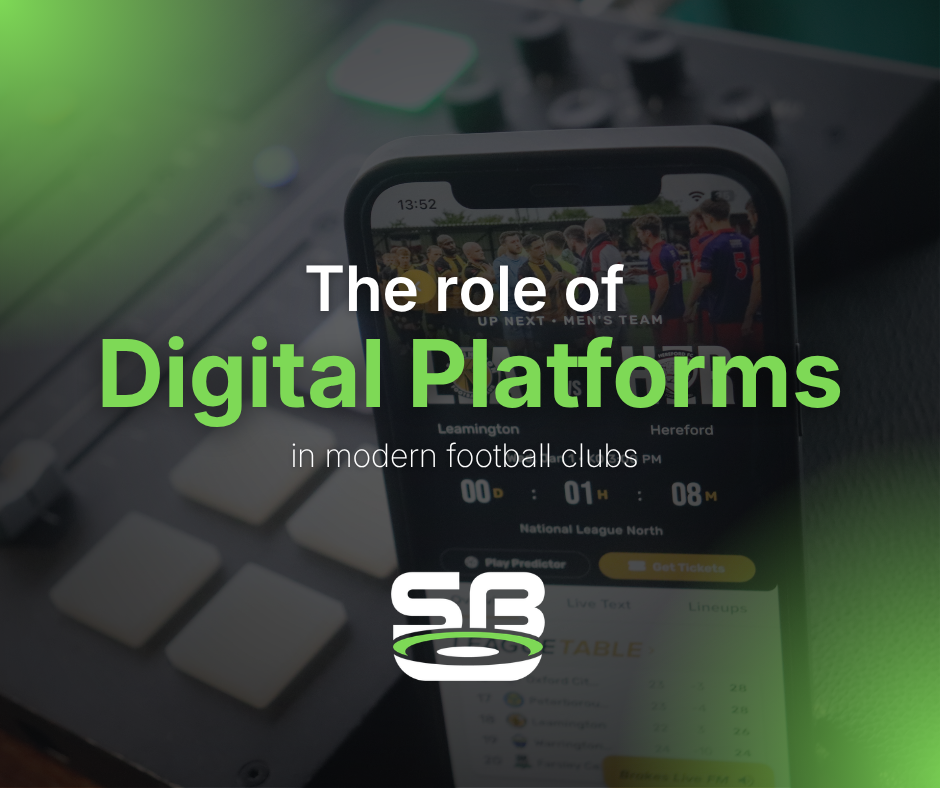
Football clubs today operate in a far more complex environment than ever before. Beyond what happens on the pitch, clubs are now responsible for managing communication, engagement, data, commercial activity, and development pathways across multiple audiences. At the centre of this evolution sits the growing importance of digital platforms.
For modern football clubs, digital platforms are no longer optional tools. They are essential infrastructure that supports how clubs operate, grow, and connect with supporters, players, and partners.
How football clubs have become digitally complex
Over time, most clubs have added digital tools to solve specific problems. A website to share news, social media to reach fans, an app to improve engagement, a youth system to manage players, and spreadsheets or CRMs to track contacts. While each tool serves a purpose, together they often create a fragmented digital setup.
This fragmentation leads to common challenges, including:
Multiple systems that don't talk to each other
Repeated updates across different platforms
Inconsistent data and reporting
Increased admin workload for staff and volunteers
Limited visibility of overall engagement
As clubs grow, these challenges become harder to manage. This is where connected digital platforms begin to play a critical role.
Why digital platforms matter more than ever
Modern football clubs are expected to operate professionally, regardless of size or league. Supporters expect real-time updates, sponsors want measurable value, and governing bodies increasingly require accurate data and reporting.
Digital platforms help clubs meet these expectations by providing structure, consistency, and control. Rather than managing disconnected tools, clubs can centralise operations and create a single digital ecosystem that supports every part of the organisation.
At their best, digital platforms do more than store information - they enable smarter decision-making, stronger engagement, and more efficient operations.
Supporting fan engagement and communication
One of the most visible roles of digital platforms is fan engagement. Supporters now expect consistent communication before, during, and after matchday, delivered through channels they trust.
Effective digital platforms allow clubs to:
Communicate directly with supporters
Share updates in real time
Deliver content across apps and websites
Maintain engagement throughout the season
By owning their communication channels, clubs reduce reliance on third-party algorithms and build stronger, more reliable relationships with their fanbase.
Improving efficiency across the club
Time and resource are major constraints for many football clubs. Staff and volunteers are often stretched, particularly at grassroots and semi-professional levels. Fragmented systems increase this burden by duplicating effort and complicating workflows.
Connected digital platforms improve efficiency by:
Reducing duplication of content and data entry
Centralising admin tasks in one dashboard
Creating consistent workflows across departments
Simplifying reporting and oversight
This efficiency allows clubs to focus on development and growth rather than system management.
Managing data with clarity and confidence
Data plays an increasingly important role in modern football, from supporter engagement to youth development. However, data only becomes valuable when it is accurate, connected, and accessible.
Digital platforms provide a single source of truth, ensuring that data is consistent across the club. This connected approach helps clubs:
Understand supporter behaviour and engagement
Track communication and interaction
Support youth and academy management
Make informed, evidence-based decisions
Without connected digital platforms, valuable insight is often lost or underused.
Supporting youth development and long-term growth
Football clubs are not just first teams - they are ecosystems that include youth sections, academies, volunteers, and families. Managing these areas through disconnected systems creates risk and inefficiency.
Modern digital platforms support long-term growth by bringing youth management, communication, and data into the same environment as senior operations. This improves visibility, safeguards continuity, and supports clear development pathways.
For clubs investing in their future, having a digital foundation that supports every level of the organisation is essential.
How StandBased fits into the modern digital landscape
StandBased was built specifically to address the challenges football clubs face with fragmented digital operations. Rather than offering a single tool, StandBased provides a holistic, 360-degree digital platform that connects the entire club.
From one central dashboard, clubs can manage:
Their app and website
Fan engagement and communication
CRM and supporter data
Social media activity
This unified approach allows digital platforms to work together rather than in isolation. Data flows across the system, engagement becomes measurable, and admin effort is significantly reduced.
Saving time, money, and effort with the right platform
The true value of connected digital platforms lies in what they remove as much as what they add. By replacing multiple tools with one connected system, clubs reduce costs, simplify operations, and free up valuable time.
Clubs using holistic digital platforms benefit from:
Lower digital overheads
Fewer systems to manage and maintain
Clearer insight into performance and engagement
A scalable setup that grows with the club
This creates a more sustainable way to operate in an increasingly digital world.
The future of football is platform-led
As football continues to evolve, digital platforms will become even more central to how clubs operate. Supporter expectations will rise, data requirements will increase, and clubs will be expected to deliver professional experiences at every level.
Clubs that invest in connected digital platforms now will be better prepared for the future. With the right foundation in place, they can adapt, grow, and engage without adding unnecessary complexity.
The holistic StandBased platform provides football clubs across the UK with a smarter, more connected way to manage their digital landscape - supporting success both on and off the pitch.